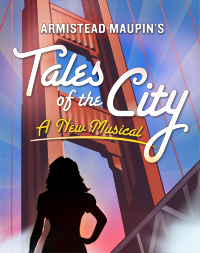
 Armisted Maupin’s novel Tales of the City finally made its way to the stage earlier this summer in Tales of the City A New Musical, birthed most appropriately in the city where its memorable characters call home, San Francisco.
For the unacquainted, Tales of the City is a classic fish-out-of-water “tale” about a young midwesterner named Mary Ann Singleton who after visiting San Francisco suddenly decides to make the city her home. Growing up in Cleveland though couldn’t prepare her for life in San Francisco in the mid 70s. The culture shock and non-stop debauchery the city is famous for is almost more than she can handle. But thanks to her new friends Mona, Mouse and Bryan, and her eccentric joint-rolling landlady Anna Madrigal, Mary Ann eventually comes out of her shell, adopting the city as her own.
Tales of the City A New Musical is directed by Jason Moore (Avenue Q) with music and lyrics by Scissor Sisters’ Jake Shears and John Garden, and Libretto by Jeff Whitty. Back in 2006 Whitty came up with the idea of taking the beloved novel and turning it into a musical after watching the critically-acclaimed 1990s mini-series, and fortunately for us the show survives the transition from book, to mini-series, to stage, its spirit intact.
Betsy Wolf brings a sweet, unassuming innocence to the role of Mary Ann, and its a pleasure to watch her character grow and transform on stage as she finally takes a bite out of the lotus that Tennyson wrote about and that her landlady Ms. Madrigal so fondly quotes.
While Mary Ann may be the heart of the show, Anna Madrigal is its soul. Played by Tony-award-winner Judy Kay, the almost ephemeral landlady steers the denizens of Barbary Lane through the turbulent 70s, offering her tenants pearls of hippy, counter-culture-infused wisdom, and providing them with the sense of family they never had.
There are many standout performances including Mary Birdsong who plays the exuberant and occasionally bare-breasted Mona Ramsey, Kathleen Elizabeth Monteleon as Dede Halcyon-Day, and Richard Poe as Edgar Halcyon, who shares an amazing chemistry with Anna Madigral on stage which is simultaneously full of both joy and sadness.
The show runs nearly 3 hours but moves briskly and hardly feels its length. Early in the first act the transitions between character introductions and musical numbers did seem a tad uneven, and the mild applause by the audience seemed to bear that out. But by the time Mona rips with abandon into the “Crotch” song during a presentation with a sexist client, the show finally finds its footing and the audience responds in kind. It’s clear sailing after that.
Like the books and the miniseries that preceded it, Tales of the City A New Musical is a story about family. And not necessarily the one that brought you into this world. Sometimes its the one you create yourself.
Tales of the City A New Musical can be seen at the American Conservatory Theatre in San Francisco through July 31.
On a more personal note, Armisted Maupin’s Tales of the City played a small but significant role in drawing me to San Francisco in the mid 90s. It seemed a rather idyllic place where people were accepted for who they were, and could lead the lives they wanted rather than those demanded by society, or even family. And while San Francisco had changed a great deal by the time I had arrived, and further still today, the heart at 28 Barbary still beats, and its rhythm is what keeps me here, and keeps me hopeful for the future.
 Not unexpectedly, there’s plenty to make your blood boil in today’s hearings on the newly announced Respect for Marriage Act which seeks to overturn DOMA. Fortunately there’s plenty of eloquent testimony in support of the new act to balance out all the hatery.